
Types of Injuries : WRIST SPRAIN

Disclaimer : This article was written by Dr. Evan Jeffries, PT, DPT. This content is provided for general informational purposes only and does not constitute medical advice, diagnosis, or treatment. The information does not guarantee specific results or effectiveness for any particular symptoms or conditions. If you are experiencing persistent symptoms or have concerns about your health, please consult a qualified healthcare professional.
What is a Wrist sprain?
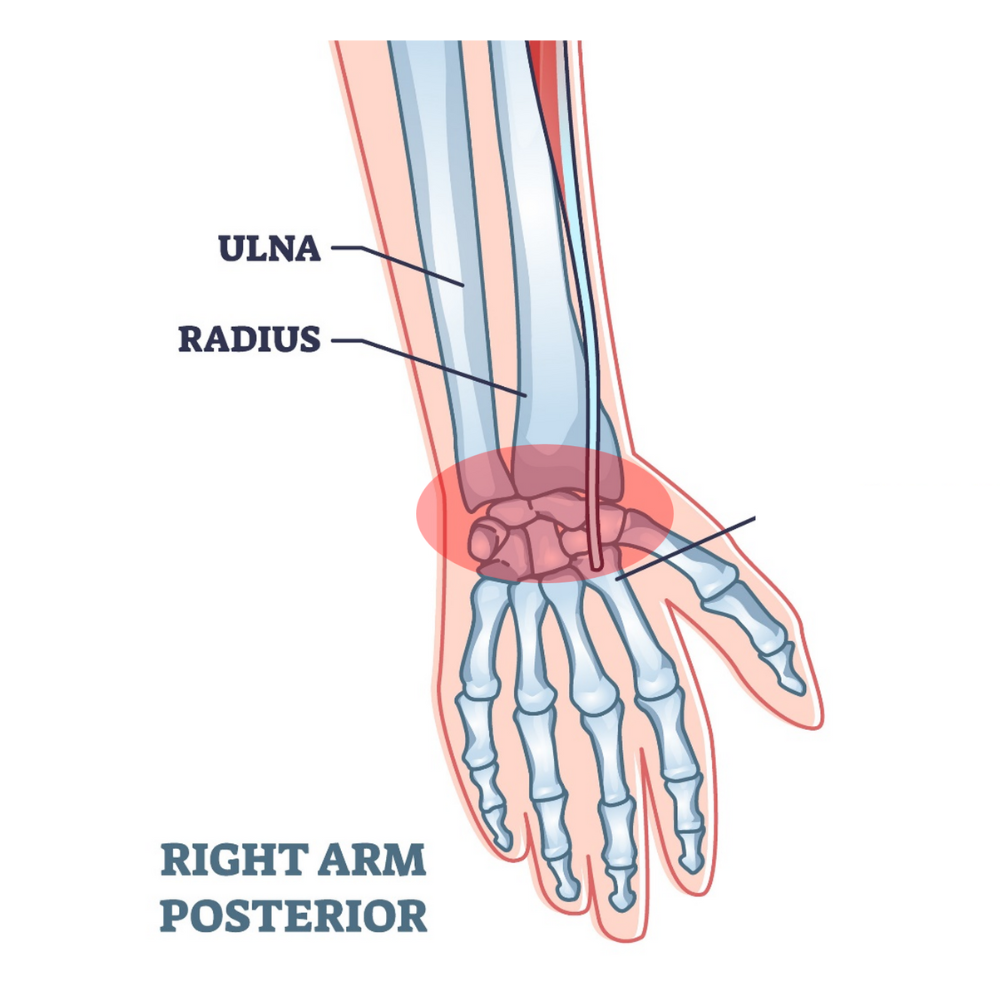
A wrist sprain is an injury to the ligaments in the wrist, typically caused by force overstretching ligaments. The ligaments of the wrist connect the forearm bones to the bones of the hand. The wrist injury can commonly occur from falls where the hand is extended to break the fall, leading the ligaments to be stretched beyond its normal position. Symptoms can include wrist pain, swelling, bruising and reduced range of motion. During this time wearing wrist support such as a wrist brace can help with recovery.
Risk factors for a wrist sprain can include:
1. Participation in sports: Sports where falls and collisions are common can increase can of a wrist sprain
2. Age: Older adults that have balance issues could cause a fall which leads to wrist injuries
3. Occupational hazards: Jobs that require repetitive wrist motions, areas to trip, and lifting heavy can cause stress to the wrist.
Why does this happen?

Our wrists are the furthest body part away from our body and provide an incredible amount of flexibility and sensory feedback. A wrist sprain can occur when the ligaments in the wrist are overstretched, usually due to sudden, forceful movements. Most commonly occurs when someone falls, and the individual extends their wrist to brace their fall. The wrist will bend too far causing the ligaments to stretch past their capacity and they can tear.
In sports, this injury is commonly scene in basketball, football, gymnastics, and skateboarding. These sports put an individual at risk for collisions and falls where they have to extend their arm to brace a fall. Sports can be can involve highly unpredictable movements where an individual has to make a quick decision during a fall and typically will extend their wrists to break their fall.
What are the symptoms?
Wrist sprains typically present in a similar fashion no matter the sport and the main symptoms include:
1. Pain and tenderness: Usually local at the wrist joint but can linger into the hand and fingers
2. Swelling: Typically, at the wrist and down into the fingers
3. Bruising: Depending on severity of the sprain bruising can be non-significant to very significant and noticeable
4. Decreased range of motion: Difficulty with bending and extending wrist
5. Unstable and loss of strength: The wrist might feel unstable and loss of grip strength is apparent
Wrist sprains can be categorized into three grade levels based on severity:
1. Grade I sprain (mild): Involves stretching or micro tearing of the ligaments. Less pain and swelling are usually noted but individual can function
2. Grade II sprain (moderate): Involves stretching of the ligaments resulting in partial tear. Pain and swelling can be significant
3. Grade III sprain (severe): Involves a complete tear of the ligaments resulting in fully unstable wrist and significant loss of function. Surgery can be an option in this case.
Understanding what type of wrist sprain can be significant in healing time and recovery.
How Long Does it Take to Heal?

The healing time for wrist sprains are dependent on severity of the sprain and what type of sport or job an individual is trying to get back to. Typically, the healing timeframe is the following:
Grade I Mild sprains: 1-2 weeks with proper rest, treatment and wrist support. A wrist band for support could be an option in this phase
Grade II Moderate sprains: Since there is a partial tear this can typically take 3-6 weeks depending on physical therapy and protective measures taken. A wrist brace for a sprain is important to allow the wrist to heal and build scar tissue.
Grade III Severe sprain: This is the longest amount of healing timeframe because of the full tear of the ligaments. This can require a significant wrist brace for immobilization and/or surgery to fix the instability. This can take several months to heal.
TREATMENT
Wrist sprains will eventually heal over time but here are three methods to help with that process
1. The P.O.L.I.C.E. method

The P.O.L.I.C.E. method can significant impact healing early on. It stands for protective, optimal loading, ice, compression and elevation. This will help control the swelling and help the wrist heal and reduce further injury by protecting it. Wrist wraps will provide compression which will help with pain and swelling early on.
2. Immobilization

For moderate to severe sprains immobilization may be necessary to allow ligaments to mend and heal. This can be a significant splint or wrist brace to keep the wrist stable and prevent movement that could exacerbate the injury. This could ultimately help the wrist heal in proper alignment and reduce discomfort
PT, DPT, MS
Evan Jeffries
EVAN JEFFRIES is a physical therapist with a Doctorate in Physical Therapy (DPT) from the University of St. Augustine for Health Sciences. He has vast knowledge of the musculoskeletal system and has treated many orthopedic conditions by bringing a proactive approach to healthcare and lifestyle.


